Qirat Quran Online

admin

Quran Classes for kids

Nikah In Islam A Comprehensive Guide

Quran Classes for kids

Nikah in Islam A Comprehensive Guide

Introduction

Nikah, sometimes known as “Islamic marriage,” is a revered and essential Islamic ritual. It represents the joining of two people in a lifetime commitment to starting a family and carrying out their social and religious obligations.

Exploring Nikah Meaning

“Marriage” in English is equivalent to the Arabic word “Nikah.” However, the significance of it goes beyond a couple saying their vows. In Islamic religion, a sacred agreement that creates a moral and legal union between a man and a woman is referred to as nikah. It is fundamental to a loving, devout family and consists of obligations, rights, and mutual consent.

Nikkah is important to Islam because it fulfills the fundamental human need for companionship and preserves the moral and ethical principles outlined in the Quran and Hadith (the sayings and actions of the Prophet Muhammad, Peace Be Upon Him).

What is Nikah in Islam ?

Islam’s teachings are based on the concept of Nikah, which Allah considers to be among the highest moral acts. It is a means of upholding the values of love, compassion, and support among family members while defending people’s chastity and dignity.

Nikah is seen as a good deed in Islamic tradition and has several important components.

Fulfillment of Sunnah

Nikah is seen as a fulfillment of the Sunnah, which are the actions and practices of the Prophet Muhammad (Peace Be Upon Him). The Prophet commended Nikah as a morally upright route and underlined its importance.

Protection of Chastity

Nikah offers an ethical and legal way to fulfil basic human needs, so preserving people’s modesty and chastity.

Preservation of Lineage

Nikah ensures the legitimate lineage of children, a fundamental principle in Islam.

Establishing a Family

The foundation of Nikah is the establishment of a family, which is necessary for the growth and development of a strong and moral community.

Fulfillment of Religious Duties

Nikah is a means of fulfilling several religious duties, including providing for one’s spouse, raising children in an Islamic setting, and ensuring that faith is practiced in the home.

Nikah Requirements

In Islam, nikah is a solemn contract that needs to fulfill a number of prerequisites in order to be deemed legitimate and enforceable. While these specifications may fluctuate significantly throughout Islamic legal institutions, they usually consist of the following.

Mutual Consent

Both the bride and the groom must willingly and fully cooperate for the marriage to succeed. It is absolutely forbidden to utilize pressure or force in Islam.

The Mahr (Dower)

As a token of his devotion and accountability, the groom is expected to give the bride a gift or monetary sum known as the Mahr.

Witnesses

The Nikah ceremony must have two adult, mentally sound Muslim witnesses to validate the contract. These witnesses are typically responsible for verifying the consent of both parties.

Offer and Acceptance

The groom offers the marriage contract, and the bride accepts it. Usually, both parties speak a formulaic remark to accomplish this.

Wali (Guardian)

The bride must have a Wali, a male guardian, to represent her interests during the Nikah ceremony. The Wali can be her father, brother, or another close male relative.

Public Announcement

The marriage is publicly publicized and the Nikah ceremony is usually performed in a public setting, such as a mosque.

Islamic Officiant (Qadi or Imam)

A certified Islamic authority, such as an Imam (a religious leader) or Qadi (an Islamic judge), officiates the Nikah ceremony.

Marriage License

Local laws in many countries require a valid marriage license in order to validate the Nikah contract.

Nikah Contract

Nikah, or marriage contract, is regarded as a holy covenant in Islam. Since both parties have been given specific obligations to fulfill towards one another in an honest and sincere manner towards God, the Qur’an refers to this as a “serious contract.”

Nikah Nama

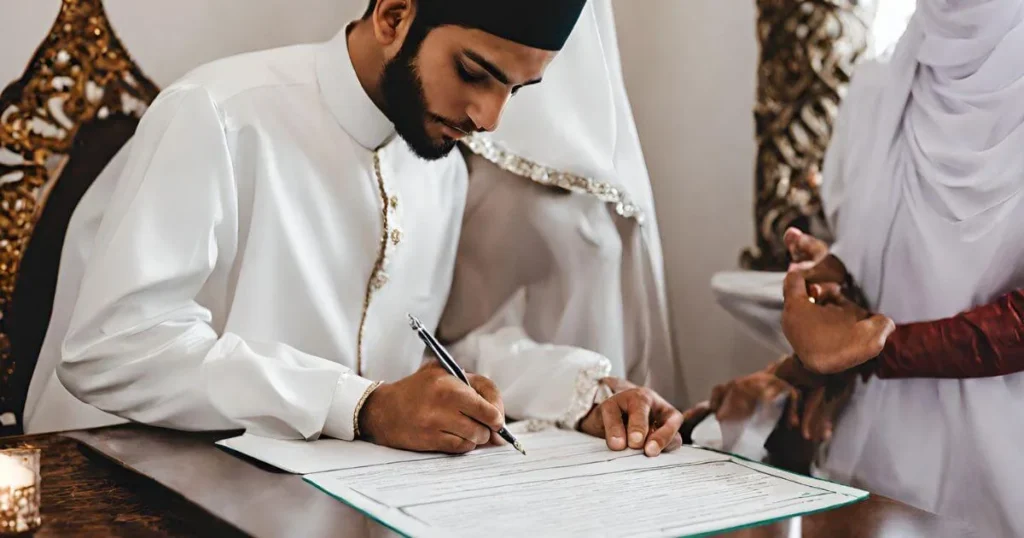
To legally become married, two Muslim partners entering into a civil union must sign a written document called a nikah nama.

Nikah Mubarak Meaning

Marriage in Arabic is referred to as nikah. In Islam, “Nikah Mubarak” is used to wish a happy life to the newlywed couple and to send wedding wishes.

Muslim Nikah

The Islamic marriage contract is called the Nikkah.

Nikah Certificate

A legal and religious document known as an Islamic marriage contract, or nikah contract, establishes the guidelines for Muslim marriage. It’s a contract that the bride and groom sign to ensure that their marriage adheres to Islamic values.

What is a Nikah?

Nikah is a contract that only a man and a woman can sign. It is expected that the bride and groom will freely consent to their marriage. A formal, enforceable contract that specifies the rights and obligations of the bride and groom is thought to be essential to an Islamic marriage that is recognised by Islam, whether it is written down or spoken.

What is a Nikah Ceremony?

The Islamic marriage ceremony, in which the Muslim couple signs the marriage contract in front of an imam and two witnesses, therefore obtaining divine legitimacy for their union.

Dua for Nikah

بَارَكَ اللّٰہُ لَكَ وَبَارَكَ عَلَيْكُمَا وَجَمَعَ بَيْنَكُمَا فِي خَيْرٍ

Dua for Nikah in English

Allah bless you and shower blessing on you and place goodness between both of you.

Conclusion

In Islam, nikah is a deep and holy pact that unites a man and a woman in a lifetime of marriage. It is a way to uphold people’s religious and moral obligations, protect their dignity, and create solid, morally grounded families. The conditions and prerequisites for Nikah uphold the principles of love, compassion, and mutual consent that are important to the Islamic institution of marriage, guaranteeing the legality and enforceability of the agreement.

FAQS:

What is the difference between Nikah and marriage?

Islamic marriage is referred to as “nikah.” While both titles refer to the idea of a formal union between two people, “Nikah” is often connected to Islamic matrimonial customs.

What happens in a Nikah?

The bride and groom formally accept the provisions of the marriage contract, which usually include the dowry (mehr) and other requirements, during the Nikah ceremony.

What are the rules of Nikah?

The rules of Nikah vary in accordance with Islamic jurisprudence and cultural practices, but they generally involve the consent of both parties, witnesses, and the recitation of marriage vows.

Share on >>

Nikah In Islam A Comprehensive Guide Read More »
Quran Classes for kids

The Profound Meaning OF Astaghfirullah

Quran Classes for kids

Astaghfirullah The Profound Meaning and Significance :

Introduction

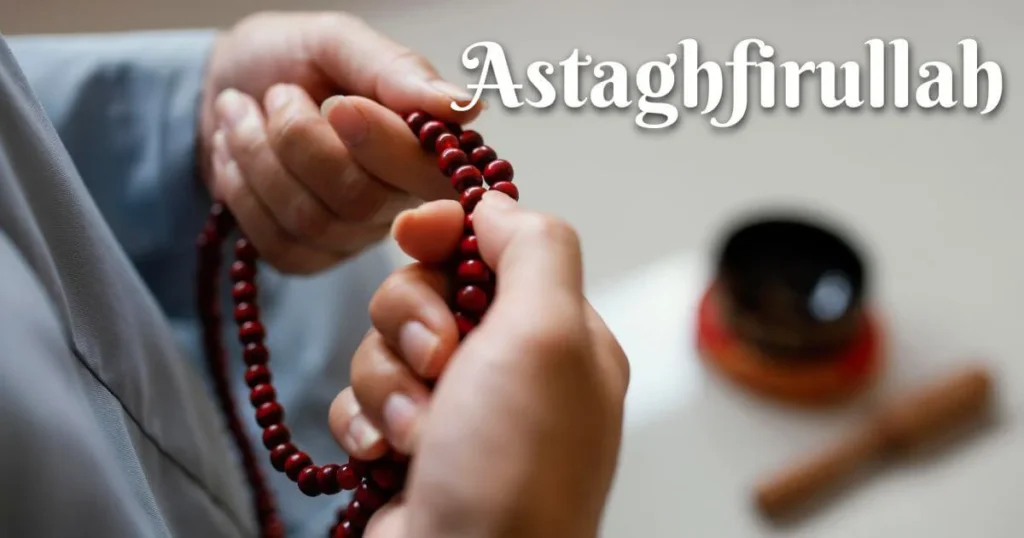
“Astaghfirullah” is an often said expression in the Muslim community, usually used at moments of remorse, reflection, and confession. It’s a strong statement with deep spiritual significance. 

Astaghfirullah in Arabic

أَسْـتَـغْـفِـرُ اللهَ

Astaghfirullah Meaning in English

I seek forgiveness to Allah

What does Astaghfirullah Mean

The term “Astaghfirullah” is derived from the Arabic root words “istighfar” (استغفار) and “Allah” (الله). It is a compound word that signifies seeking forgiveness from Allah, the Most Merciful. When a person utters “Astaghfirullah,” they are humbly acknowledging their sins and shortcomings and beseeching Allah for His forgiveness and pardon.

The practice of seeking forgiveness is deeply rooted in Islamic tradition and reflects the belief in Allah’s boundless compassion and willingness to forgive His servants when they sincerely repent.

The Importance of Astaghfirullah Meaning

For various reasons, Astaghfirullah has a big impact on a Muslim’s life.

Meaning of Astaghfirullah

Uttering  powerful act of repentance. It is an acknowledgment of one’s sins and a plea for Allah’s forgiveness. Muslims believe that sincere repentance is met with Allah’s mercy and forgiveness

Self-Reflection

 prompts self-reflection and self-awareness. It encourages people to accept responsibility for their mistakes and make improvements to themselves.

Spiritual Cleansing

Pleading for forgiveness through spiritual cleansing. It helps people to free themselves from the burden of sin, which draws them nearer to Allah.

Humbling the Soul

Asking for forgiveness is a humble gesture. It serves as a reminder of people’s frailty and reliance on Allah’s kindness and compassion. It is a display of modesty and surrender to the Creator.

Constant Remembrance of Allah

 simple yet powerful phrase that serves as a means of constant remembrance of Allah. It inspires people to keep a close relationship with God throughout their everyday life.

The Act of Seeking Forgiveness

In a Muslim’s life, asking for forgiveness via “Astaghfirullah” can take many different forms. It can be practiced at any time and anywhere. It is not time- or place-bound. Some ways in which Muslims incorporate into their lives include:

Daily Remembrance

Many Muslims include the recitation  part of their daily supplications and remembrance of Allah. It is a regular practice to seek forgiveness and maintain a sense of humility.

After Committing Sins

When a person becomes aware of their sins or wrongdoings, they often say “Astaghfirullah” as an immediate response. This expression reflects their remorse and desire for forgiveness.

During Prayer (Salat)

 sometimes recited within the prayers (Salat) as a means of seeking Allah’s forgiveness during a sacred act of worship.

Before Sleep and Upon Waking

Common recitation among Muslims both before bed and in the morning. This ritual serves as a time for introspection and confession at the conclusion of each day.

In Times of Difficulty

Muslims may seek comfort and spiritual assistance from sources during difficult, stressful, or distressing times.

Conclusion

Profound and important expression in the life of a Muslim. It serves as a constant reminder of the requirement of spiritual purity, humility, and self-improvement. It symbolises requesting Allah for forgiveness and reflects the core principle of Islam’s repentance—tabarakAllah, which means “Islam is blessed by Allah.” Uttering “Astaghfirullah” is a powerful way for individuals to acknowledge their sins, express remorse, and seek Allah’s forgiveness, all while maintaining a strong connection with the Divine in their daily lives.

FAQS:

What does astaghfirullah Hil Azeem mean?

“Astaghfirullah Hil Azeem” is an Arabic phrase that means “I seek forgiveness from Allah, the Almighty.”

What is the Arabic saying ?

The Arabic phrase “Astaghfirullah” is frequently used to express regret for one’s transgressions and ask Allah for pardon.

Is it OK to say astaghfirullah?

In Islamic tradition, saying “Astaghfirullah” is a sign of forgiveness and spiritual cleansing, and it is both perfectly acceptable and recommended.

Share on >>

The Profound Meaning OF Astaghfirullah Read More »

Quran Classes for kids

How To Make Wudu

Quran Classes for kids

How to make Wudu A Step By Step Guide :

What is Wudu?

We must intellectually, physically, and spiritually prepare ourselves before we may offer salah. Known as wudu, this recipe consists largely of it. Every Muslim has to go through this cleansing procedure before they can offer prayers.

It is such a crucial component of the salah that anyone choosing to omit it out of ignorance, carelessness, or ignorance will have their prayer rejected by Allah.

Our beloved Prophet Muhammad (Peace Be Upon Him) said

“No salah is accepted without wudu (purification)”

Sahih Muslim, Book 2, Hadith 2

How to do Wudu?

Here are the steps to make Wudu.

Wudu Steps

Step 1

In order to conduct salah, you must first realize that you are about to start the wudu process. This is when no special remarks or words of wisdom are needed. Developing the intention is a mental and emotional process.

Step 2

This is an essential step in the wudu process. It is necessary for us to say Bismillah (In the Name of Allah) before starting to wash ourselves. You can tell yourself that in silence.

Step 3

It is taught by the Prophet Muhammad (Peace Be Upon Him) to start from our right side. This means that you will need to wash your right hand three times, starting at the fingertips and ending at the wrist.

Ensure that the entire hand is submerged in water. Then, three times with your left hand, repeat the same motions.

Step 4

Rinse your mouth three times with water that you took into your right hand. To ensure that your mouth is thoroughly cleaned, do this.

Step 5

Sniff some water into your nose with your right hand.

Here, we’ve used the word “sniff” to help you understand what we mean. Three times, you must snort, or inhale the water into your nose, then expel it. Avoid consuming excessive amounts of water since this could lead to injury.

Step 6

It is necessary to wash every area of the face. This refers to the area between your ears and the region between your forehead and chin. Repeat these three steps.

When washing your face, run your damp hands through your beard if you’re a man with a beard.

Step 7

Wash your right arm three times, starting at the fingertips and working your way up to the elbow. Ensure that no area remains dry. Then, repeat the same procedure three times with your left arm.

Step 8

Step 8 instructs you to “wipe” rather than “wash” your head. Here, the word choice was deliberate. With your hands still damp, move them from the forehead’s top to the back of the head, and back again. It is only done once.

What kind of hair you have is irrelevant. The procedure is the same whether you have long or short hair.

Step 9

The water from step 8 should be used for this step. You will wipe the inside of your ears with your index fingers and the area behind them with your thumb when using your damp hands.This is done only once.

Step 10

We’ll wash our feet three times, just like we did with our hands. Wash your right foot starting at the toes and going all the way up to your ankle. Ensure that water contacts all parts of the right foot, particularly the space between the toes and the rear of the ankle. Repeat this three times using your right foot, then three times using your left foot.

Dua after Wudu

“أَشْهَدُ أَنْ لَا إِلَهَ إلَّا اللهُ وَحْدَهُ لَا شَرِيكَ لَهُ، وَأَشْهَدُ أَنَّ مُحَمَّداً عَبْدُهُ وَرَسُولُهُ”


Wudu Dua Transliteration

“Ash-hadu ‘an laa ‘ilaaha ‘illallaahu wahdahu laa shareeka lahu wa ‘ash-hadu ‘anna Muhammadan ‘abduhu wa Rasooluhu.”

Wudu Dua in English

“I bear witness that none has the right to be worshipped but Allah alone, Who has no partner; and I bear witness that Muhammad is His slave and His Messenger.”

Important Notes on How to perform Wudu?

  • Keeping a certain order is essential when making wudu. An ablution could be rendered void if the order is broken.
  • Sincere and focused effort should be put into each of the aforementioned actions, since they all show your desire to purify oneself in preparation for worship.
  • Before continuing with your acts of devotion, you must repeat the entire wudu if you break your ablution during it (for example, by passing gas or using the restroom).

How to make Wudu?

Wudu steps are mentioned above.

What to say after Wudu?

Say the above mentioned  Wudu Dua after wudu.

Conclusion

In Islam, wudu, also known as ablution, How to make Wudu is a vital and necessary ritual that represents cleanliness, spiritual preparedness, and unity with Allah. It is a procedure that enables Muslims to keep ritual cleanliness and get ready for acts of devotion like prayer. Making wudu is a spiritual act of devotion as well as a physical purification. Muslims are reminded of the value of purity, intention, and mindfulness in their daily lives as they participate in this lovely rite.

FAQS:

What are the 4 rules of wudu?

Islam’s four wudu laws are to wash one’s face, wipe one’s head, wash one’s feet, and wash one’s arms up to the elbows.

How to make Tayammum?

When water is unavailable or using it would be hazardous, tayammum is used in place of wudu. It entails hitting the ground and cleaning one’s hands and face.

Do you have to do wudu everytime you pray?

In Islam, wudu is conducted prior to all mandatory prayers.

Why is wudu necessary?

In Islam, wudu is a prerequisite for self-purification and being ready for prayer.

Share on >>

How To Make Wudu Read More »

Quran Classes for kids

Islamic Condolence Messages

Quran Classes for kids

Islamic Condolence Messages :

It is important to recognize the impact that kind comments can have during grieving and loss. Expressing sympathy is a fundamental aspect of interpersonal communication, and it holds great importance in the Islamic faith. We discuss Islamic condolence messages in this post, delivering succinct and sincere statements that are suited for numerous occasions, such as expressing sympathy to colleagues, coworkers, family, and people who are suffering the loss of a loved one.

How to write Islamic Condolence Messages

  • Start with a heartfelt greeting:

Begin your message with a warm and caring greeting, addressing the recipient by name.

  • Express your sympathy and sorrow:

Offer your sincere condolences and express your sadness about the loss. Use words like “I’m so sorry for your loss,” “My deepest sympathy,” or “I was deeply saddened to hear about…”

  • Share memories or qualities:

If you knew the deceased, you can mention a positive memory or quality that you admired. For example, “I’ll always remember how kind and compassionate they were.”

  • Offer support and help:

Let the person know that you’re there for them if they need anything. You can say, “If there’s anything I can do to help or support you during this difficult time, please don’t hesitate to ask.”

  • Keep it simple and sincere:

Your message doesn’t need to be lengthy or overly formal. A heartfelt, genuine message is more important than the length.

  • Avoid clichés:

Try to avoid common clichés like “They’re in a better place” or “Time heals all wounds.” Instead, focus on personalized words of comfort.

  • Be sensitive:

Be mindful of the person’s religious or cultural beliefs. Your message should respect their customs and traditions.

  • Offer final condolences and sign off:

End your message by expressing your condolences once more, such as “Please accept my heartfelt condolences.” Sign your message with a warm closing, like “With deepest sympathy” or “With love and prayers.”

  • Send your message promptly:

It’s important to send your condolences as soon as you learn of the loss to provide immediate support.

Here are some examples of condolence messages:

Short Islamic Condolence Messages to a Friend:

  • “I’m deeply sorry for your loss. May Allah grant you strength during this difficult time.”
  • “My heart aches for you. Your friend will always be in our prayers.”
  • “Inna lillahi wa inna ilayhi raji’un. Your friend’s memory will live on in our hearts.”
  • “Please know that I’m here for you, no matter the hour. Your friend was truly special.”
  • “Sending you love and strength as you navigate this loss. Your friend’s spirit will always shine.”
  • “May Allah’s mercy embrace your dear friend. You’re in my thoughts and prayers.”
  • “Your friend’s legacy of kindness will forever be remembered. My deepest condolences.”
  • “Grief is a journey, and you don’t walk it alone. I’m here for you, my friend.”
  • “May Allah grant your friend a place in Jannah. We’re here to support you.”
  • “During this time of sorrow, remember the joy your friend brought to our lives. You have our heartfelt condolences.”

Islamic Condolence Messages for a Coworker:

  • “Our workplace won’t be the same without our dear colleague. My deepest sympathies to you and your team.”
  • “Your coworker’s dedication was an inspiration to us all. May their soul find peace.”
  • “In these difficult times, your professional family is here to support you. We’ll remember your coworker’s contribution with gratitude.”
  • “The loss of a coworker is felt deeply by all of us. We share in your sorrow and offer our sincere condolences.”
  • “A dedicated coworker, now an angel watching over us. Our thoughts are with you.”
  • “Inna lillahi wa inna ilayhi raji’un. Your coworker’s presence will be missed, but their legacy will endure.”
  • “We remember your coworker’s positive impact on our work and lives. Our heartfelt condolences go out to you.”
  • “As colleagues and friends, we are here to support you. Your coworker’s memory will be cherished.”
  • “May Allah grant your coworker eternal rest. You are in our thoughts and prayers.”
  • “Your coworker’s kindness and professionalism touched us all. We offer our deepest condolences.”

Short Islamic Condolence Messages to Family:

  • “Your family is in our prayers during this time of loss. May Allah grant you patience and strength.”
  • “Inna lillahi wa inna ilayhi raji’un. Your family’s sorrow is shared by all who knew your loved one.”
  • “Our hearts ache for your family. Your loved one will never be forgotten.”
  • “During this time of grief, your family is not alone. We are here to support you.”
  • “May Allah’s mercy surround your family. Your loved one’s memory lives on.”
  • “In the embrace of family and friends, you’ll find solace. We offer our deepest condolences.”
  • “Our thoughts and prayers are with your family as you navigate this loss. We share in your sorrow.”
  • “Your family’s loved one was a source of light and love. Their legacy remains in our hearts.”
  • “May Allah grant your family strength and patience during this difficult time.”
  • “In the face of this sorrow, your family’s resilience shines brightly. Our heartfelt condolences.”

Islamic Condolence Messages on Death:

  • “Inna lillahi wa inna ilayhi raji’un. Your loss deeply touches our hearts. May your loved one rest in peace.”
  • “Your loved one’s passing is a reminder of life’s fragility. We stand by you in this time of grief.”
  • “May Allah grant your departed loved one a place in Jannah. Your family is in our thoughts and prayers.”
  • “As you mourn, remember the joy and love your loved one shared with the world. We offer our deepest condolences.”
  • “Your loved one’s memory will forever be a source of strength and inspiration. We grieve with you.”
  • “In these moments of sorrow, your community surrounds you with love and compassion. Your loved one’s legacy lives on.”
  • “We share in your grief as you say goodbye to your dear one. May Allah grant you patience and comfort.”
  • “Your loved one’s kindness and love touched us all. We offer our heartfelt condolences.”
  • “During this difficult time, may Allah’s grace provide your family with solace and strength.”
  • “Your loved one’s spirit will continue to shine through the memories and love they left behind. We stand by you in your loss.”

Islamic Condolence Messages for Loss of Mother

  • Inna lillahi wa inna ilayhi raji’un. May Allah provide solace and a spot in Jannatul Firdaus (Paradise) for your dear mother. My sincere sympathies are with you and your family.
  • Words seem inadequate at this time, but please know that you and your family are in my thoughts and prayers. I pray that Allah gives you comfort and endurance during this trying time. I hope the soul of your mother is at peace.
  • Losing a mother is a profound loss. May Allah shower His mercy upon her and grant her a place in Jannah. May He also give you courage and solace in the days to come.

Islamic Condolence Messages for Loss of Father

  • Please accept my sincere condolences on the loss of your father. May Allah pardon him and assign him to the uppermost reaches of Paradise. May He also bring comfort during this trying time to you and your family.
  • May he be rewarded for his good efforts by Allah (SWT) and be granted eternal peace. My heartfelt condolences to you and your loved ones.
  • Please accept my sincerest condolences for your loss. May Allah grant your father a peaceful journey and a place among the righteous in Jannah. May He also strengthen you and your family during this time of grief.

Islamic Condolence Messages for Loss of Son

  • There are no words that can express the depth of sorrow for the loss of a son. May Allah grant you and your family unimaginable strength and comfort during this unimaginable time.
  • May Allah (SWT) grant him comfort and a place in Jannah. We will keep you and your family in our prayers.
  • Inna lillahi wa inna ilayhi raji’un. May Allah grant your son paradise and grant you and your family patience during this difficult time.

Islamic Condolence Messages for Loss of Sister

  • My heart aches for your loss. May Allah grant your sister peace and a beautiful place in Jannah. May He also grant you and your family comfort during this difficult time.
  • Sisters are a special kind of friend. May Allah grant your sister a peaceful hereafter and grant you strength to bear this loss. We are here for you if you need anything.
  • May Allah (SWT) grant her mercy and a place in Paradise. May He also ease your sorrow and grant you comfort.

Islamic Condolence Messages for Loss of Wife

  • The depth of my sadness for your loss is beyond words. May Allah provide your spouse serenity and a spot in Jannah. I pray that He gives you and your family courage through this trying time.
  • Your wife was a wonderful person and will be dearly missed. May Allah (SWT) grant her a peaceful hereafter and fill your heart with cherished memories.
  • Please accept my deepest condolences on the passing of your wife. May Allah grant her paradise and grant you the strength to endure this immense loss.
Conclusion:

Sending Islamic condolences to people who are grieving gives them solace and support during difficult times. These remarks, which are full of compassion and faith, express the community’s strong sense of empathy and unity. The strength of shared grief and connection keeps us together as we face the unavoidable hardships of life. I hope that these words of comfort may bring comfort to those who are grieving and act as a constant reminder of the love and memories of people we have lost.


FAQS:

What do you say when someone dies in Islam text?

In Islam, when someone dies, you can say “Inna lillahi wa inna ilayhi raji’un,” which means “Verily, we belong to Allah and to Him we shall return.”

What do you say when someone is lost in Islam?

When someone is lost, the same phrase “Inna lillahi wa inna ilayhi raji’un” can be used.

What is the dua for condolences in Islam?

A common dua for condolences in Islam is “May Allah grant you patience and reward you in your affliction.”

How do Muslims express grief?

Muslims express grief through prayers, remembrance, patience, and seeking comfort from Allah.

Share on >>

Islamic Condolence Messages Read More »

Quran Classes for kids

What is Halal

Quran Classes for kids

What is Halal ?

Introduction to Halal Food, Meat, and Chicken

The various food-related beliefs and dietary practices that exist in today’s multicultural society must be recognized and understood. The word “halal” has grown in popularity, especially among Muslims. In this comprehensive tutorial, we will examine the meaning and significance of halal, with special focus on halal food, halal meat, and halal poultry.

Halal Meaning

“Halal” is an Arabic word that signifies “permissible” or “lawful.” It refers to food and beverages that are deemed acceptable by Islamic standards in the context of Islamic dietary regulations. The Quran, the sacred book of Islam, and the Hadith (sayings and deeds of the Prophet Muhammad, Peace Be Upon Him) both contain halal standards. Muslims can make moral eating and lifestyle decisions based on these guidelines.

Halal Definition

Generally speaking, any food is regarded as halal in Islam unless the Qur’an or Hadith specifically forbid it. According to the official definition, halal foods are those that are processed, developed, produced, manufactured, and/or stored using utensils, equipment, and/or machinery that have been cleaned in accordance with Islamic law, and free of any ingredient that Muslims are forbidden from consuming.

What is Halal Food?

Any food or drink that conforms to Islamic dietary regulations is considered halal. The following are the main guidelines for halal food.

Animal Slaughter

The method of slaughtering animals for meat must adhere to specific guidelines. This entails calling upon Allah (God) before slaughter, making sure the animal is still alive when it is slaughtered, and swiftly severing the animal’s large blood veins in the neck with a sharp knife.

No Pork

In Islam, pork and its byproducts are absolutely forbidden. Any food or beverage that includes pig or any of its byproducts is forbidden, or haram.

No Alcohol

Drinking alcohol is prohibited as well. Alcohol-containing meals and beverages are therefore not regarded as halal.

Ethical Treatment

The treatment of animals and the conditions in which they are raised and slaughtered are important factors in determining the halal status of meat and poultry.

No Cross-Contamination

Halal food should not come into contact with haram materials or utensils in order to preserve its purity.

Avoidance of Harmful Substances

Any hazardous or damaging food or beverage is regarded as haram.

It’s important to note that halal extends beyond just the type of meat consumed; it encompasses the entire process from sourcing ingredients to food preparation.

What is Halal Meat?

Meat from animals that have been slaughtered in conformity with Islamic law is referred to as halal meat. The following are essential qualities of halal meat.

Slaughter Method

The animal must be slaughtered by a Muslim who is of sound mind and has reached the age of maturity. Before making the incision and making sure the animal is still alive when it is slaughtered, the butcher, sometimes referred to as a “zabiha” or “dhabiha,” must mention the name of Allah (Bismillah).

Animal Selection

The animal must be a permissible (halal) species, such as cattle, sheep, goats, and poultry. The animal must also be disease-free and in good health.

No Pork or Pork By-Products

 There cannot be any pork or pig byproducts in halal meat. This ban covers the animal’s food and nutrition as well.

Ethical Treatment

The welfare and ethical treatment of the animal before and during slaughter are essential. Mistreatment or undue stress on the animal is contrary to Islamic principles.

No Cross-Contamination

To maintain the purity of halal meat, it should not come into contact with haram substances or utensils.

Draining Blood

After slaughter, it’s essential to drain the blood from the meat, as the consumption of blood is strictly forbidden in Islam.

What is Halal Chicken?

Particularly, chicken meat that conforms to Islamic dietary regulations is referred to as halal chicken. It’s restricted to chicken but adheres to the same general rules as halal beef. Important features of chicken halal include

Slaughter Method

The slaughtering of chickens for halal meat follows the same guidelines as other halal meat. A Muslim slaughterer must invoke the name of Allah before making the cut.

Animal Selection

Halal chicken is sourced from healthy chickens that are of a permissible (halal) species.

No Pork or Pork By-Products

Just like with other halal meat, halal chicken should not contain any pork or pork by-products. This ban includes the birds’ food and diet as well.

Ethical Treatment

In the process of producing halal chicken, the humane care of hens is paramount. ensuring that animal welfare is compliant with Islamic teachings.

No Cross-Contamination

Halal chicken should not come into contact with haram materials or utensils in order to preserve its purity.

Draining Blood

After the chicken is slaughtered, its blood must be drained because it is forbidden in Islam to eat blood.

The Importance of Halal in Muslim Culture

For Muslims, halal cuisine—which includes halal poultry and meat—is essential. Following the halal food regulations is a sign of a Muslim’s dedication to a holistic lifestyle, not just a religious requirement. The following are some major explanations for why halal is important in Muslim culture.

Religious Obligation

Following halal dietary laws is a fundamental religious obligation for practicing Muslims. It is a means of fulfilling their faith and maintaining a strong connection to their religious identity.

Spiritual Well-Being

It is said that eating halal food improves Muslims’ spiritual health. It encourages attention and a sense of purity in day-to-day living.

Ethical Considerations

Halal food rules prioritize the humane treatment of animals and the procurement of food from ethical sources. This aligns with the principles of responsibility and empathy.

Healthy Lifestyle

Halal beef and chicken are often viewed as healthier options because they place a higher priority on ethical treatment, quality sourcing, and the absence of potentially harmful substances.

Conclusion

Halal is an essential component of Muslim culture and a reflection of faith, ethics, and community. It comprises halal meat, halal poultry, and halal cuisine. Acquiring knowledge of the halal principles and practices encourages greater consciousness of and reverence for this eating tradition. Whether you are a Muslim seeking to adhere to these dietary restrictions or someone else wanting to respect and accommodate the dietary choices of Muslim friends and neighbors, understanding halal is a step towards promoting inclusivity and cultural understanding.

FAQS:

What makes something halal?

In Islam, something is deemed halal (permissible) if it follows the dietary regulations found in the Quran and Hadith, which exclude certain forbidden (haram) elements.

What foods are halal?

Halal foods are those that meet Islamic dietary requirements, such as abstaining from pork and its by-products, following proper slaughter practices, and excluding alcohol

What are the rules of halal?

Halal regulations concern the preparation and consumption of food, beverages, and other items in compliance with Islamic dietary regulations.

What does it mean when a product is halal?

When a product is halal, it means that it is permissible for Muslims to consume or use, as it complies with Islamic dietary and ethical standards.

Share on >>

At Qirat Quran Online we offer a variety of courses that will help you Quran learner learn the Quran Quran teaching online like never before.​ Our program includes all aspect of Quran understanding from complexities of Tajweed Rules and Quran Recitation to the honorable journey of Koran and Quran Memorization “Hifz”. Explore Quran Translation .

What is Halal Read More »

Quran Classes for kids

Shab E Barat 2024

Quran Classes for kids

Shab e Barat 2024 A Night of Forgiveness and Reflection:

Shab e Baraat, also known as the Night of Forgiveness, is an auspicious and important night in the Islamic calendar; It is a time to think of Allah, pray and ask for forgiveness.

When is Shab e Barat 2024?

The Arabic phrase “Shab e Barat” translates to “Night of Records” or “Night of Assignment.” According to the Islamic lunar calendar, this night occurs on the fifteenth day of Sha’ban, the eighth month. It is said that on Shab e Barat, Allah decides each person’s fate for the upcoming year. It is a time when one brings their deeds before Allah and asks for pardon.

Significance of Shab e Barat 2024 USA

Muslims celebrate Shab e Barat with great significance for a number of reasons:

Forgiveness

Asking Allah for pardon is one of Shab e Barat main topics. Muslims believe that Allah’s forgiveness and mercy are abounding on this night. It is a chance to ask Allah for forgiveness and turn from one’s sins.

Destiny

It is thought that on Shab e Barat, Allah determines each person’s fate and destiny for the following year. This idea highlights the significance of praying, confessing one’s sins, and asking Allah for forgiveness.

Intercession

Muslims also hold that the Prophet Muhammad, Peace Be Upon Him, makes a plea to Allah on behalf of his people on this night, requesting their pardon and welfare.

Reflection

Shab e Barat is a night to reflect and evaluate oneself. It provides a time to reflect on one’s behaviour, seek forgiveness for mistakes, and set goals for personal progress.

Customs and Practices on Shab e Barat 2024 Dua

Prayers and Worship

Muslims do prolonged acts of worship on Shab e Barat, such as the unique nighttime prayers known as Salat al-Tasbih or Salat al-Shukr. The purpose of these prayers is to seek Allah’s forgiveness and blessings.

Recitation of the Quran

Many Muslims set aside time to read and reflect on Quranic passages, looking to them for guidance and spiritual support.

Charity and Acts of Kindness

During Shab e Barat, it is customary to donate to the less fortunate, perform charitable acts, and support those in need. In addition, a lot of people provide food and sweets to their communities and neighbors.

Visiting Graves

Some Muslims go to their loved ones’ graves to offer prayers for their spirits and ask Allah to have mercy on them.

Fasting

While it is not required, some Muslims fast on the 15th of Sha’ban, which includes Shab e Barat 2024 night, as a sign of adoration and to ask Allah to bless them.

Dua (Supplication)

Shab e Barat 2024 is a night of earnest and profound prayer. Muslims offer prayers for everyone, including themselves and their family. It’s an opportunity to open out to Allah and seek His protection and guidance.

Community Gatherings

Shab e Barat is a spiritually significant day, and many mosques and Islamic centers reinforce this by hosting special events and talks on the occasion.

When is Shab e Barat 2024 USA

Because the Islamic calendar is lunar, its dates change annually in accordance with the Gregorian calendar. To find out when Shab e Barat will be in 2024, we must consult an Islamic calendar or a reliable Islamic institution. I am unable to supply specific Islamic dates after September 2021, the date of my most recent knowledge upgrade. It is important to understand that the exact day may vary depending on local moon sighting practices in different areas. As a result, it is best to check with your local mosque or Islamic centre for the specific day of Shab e Barat in 2024.

Shab e Barat 2023

In Islam, Shab e Barat—also called the “Night of Decree” or the “Night of Forgiveness”—is a momentous occasion. According to the Islamic lunar calendar, it occurs on the fifteenth day of Sha’ban, which is the night when Allah determines each person’s fate for the future year. Muslims spend the night in prayer, appealing for protection and seeking forgiveness. Shab e Barat is expected to be celebrated in early April 2023, though the dates may fluctuate depending on local customs and moon sightings.

Conclusion

For Muslims around the world, Shab e Barat 2024 is a night of great spiritual significance. It’s a moment to reflect, pray, and ask Allah for blessings and forgiveness. Shab e Barat in 2024 may fall on a different day, but the spirit of the event a night for introspection, confession, and fortifying one’s faith and relationship with Allah will always be present. Shab e Barat 2024 offers hope and rejuvenation for the upcoming year by serving as a reminder of Allah’s unending compassion and forgiveness when Muslims unite in devotion and ask for His mercy.

FAQS:

What is Shab e Barat and why it is celebrated?

Islamic tradition celebrates Shab e Barat, also called the Night of Forgiveness, on the fifteenth day of Sha’ban. It’s a night of prayer, dedication, and asking for pardon for transgressions.

What is the Shab e Barat 2023?

In 2023, Shab e Barat takes place on April 9–10, evening.

Why do Muslims fast on Shab e Barat?

On Shab e Barat, some Muslims fast as a form of prayer and supplication for blessings and forgiveness.

What do you pray on Shab e Barat?

Muslims conduct special prayers, ask for forgiveness, and pay tribute to loved ones who have passed away on Shab e Barat. This is a night of introspection and rebirth.

What is the dua for Shifa for the sick?

“I ask Allah, the Mighty, the Lord of the Mighty Throne, to cure you.”

Share on >>

Shab E Barat 2024 Read More »

Quran Classes for kids

60 Quotes from the Quran

Quran Classes for kids

60 Quotes from the Quran to Inspire Your Life :

Introduction

The holy book of Islam, the Quran, provides a wealth of knowledge and inspiration in addition to being a source of divine guidance. Its verses provide insightful perspectives on a range of topics, including motivation, achievement, happiness, kindness, and overcoming obstacles like despair Quotes from the Quran. We’ll look at 60 Quranic quotes in this extensive book that teach important lessons that can be used for inspiration, motivation, and introspection Quotes from the Quran.

Motivational Quotes from the Quran

  • “And whoever is conscious of Allah, He will make for him a way out.” (Quran 65:2)
  • “So verily, with hardship, there is relief.” (Quran 94:6)
  • “Do not grieve; indeed, Allah is with us.” (Quran 9:40)
  • “And your Lord is the Forgiving, Full of Mercy. If He were to impose blame upon them for what they earned, He would have hastened for them the punishment; but for them is an appointment from which they will never never be averted.” (Quran 18:58)
  • “And those who strive for Us – We will surely guide them to Our ways. And indeed, Allah is with the doers of good.” (Quran 29:69)
  • “And He found you lost and guided [you].” (Quran 93:7)
  • “So be patient. Indeed, the promise of Allah is truth.” (Quran 30:60)
  • “And your Lord is the Free of need, the possessor of mercy. If He wills, He can do away with you and give succession after you to whom He wills, just as He produced you from the descendants of other people.” (Quran 6:133)
  • “So whoever does an atom’s weight of good will see it.” (Quran 99:7)
  • “And never think of those who have been killed in the cause of Allah as dead. Rather, they are alive with their Lord, receiving provision.” (Quran 3:169)

Inspirational Quotes from the Quran

  • “Whoever does righteousness, whether male or female, while he is a believer – We will surely cause him to live a good life, and We will surely give them their reward [in the Hereafter] according to the best of what they used to do.” (Quran 16:97)
  • “And do not be like she who untwisted her spun thread after it was strong.” (Quran 16:92)
  • “And seek help through patience and prayer, and indeed, it is difficult except for the humbly submissive [to Allah].” (Quran 2:45)
  • “Indeed, Allah is with the patient.” (Quran 2:153)
  • “Say, ‘O My servants who have transgressed against themselves [by sinning], do not despair of the mercy of Allah. Indeed, Allah forgives all sins. Indeed, it is He who is the Forgiving, the Merciful.’” (Quran 39:53)
  • “And those who, when they commit an immorality or wrong themselves [by transgression], remember Allah and seek forgiveness for their sins – and who can forgive sins except Allah? – and [who] do not persist in what they have done while they know.” (Quran 3:135)
  • “And whoever fears Allah – He will make for him a way out and will provide for him from where he does not expect.” (Quran 65:3)
  • “And your Lord is the Forgiving, Full of Mercy. If He were to impose blame upon them for what they earned, He would have hastened for them the punishment; but for them is an appointment from which they will never never be averted.” (Quran 18:58)
  • “Whoever does righteousness, whether male or female, while he is a believer – We will surely cause him to live a good life, and We will surely give them their reward [in the Hereafter] according to the best of what they used to do.” (Quran 16:97)
  • “So be patient. Indeed, the promise of Allah is truth.” (Quran 30:60)

Life Quotes from the Quran

  • “And We will surely test you with something of fear and hunger and a loss of wealth and lives and fruits, but give good tidings to the patient.” (Quran 2:155)
  • “And He gave you from all you asked of Him. And if you should count the favor of Allah, you could not enumerate them. Indeed, mankind is [generally] most unjust and ungrateful.” (Quran 14:34)
  • “We have certainly created man in the best of stature.” (Quran 95:4)
  • “And We will surely test you with something of fear and hunger and a loss of wealth and lives and fruits, but give good tidings to the patient.” (Quran 2:155)
  • “He knows what is within the heavens and the earth and knows what you conceal and what you declare. And Allah is Knowing of that within the breasts.” (Quran 64:4)
  • “And when adversity touches man, he calls upon Us; then when We bestow on him a favor from Us, he says, ‘I have only been given it because of [my] knowledge.’ Rather, it is a trial, but most of them do not know.” (Quran 39:49)
  • “Say, ‘O My servants who have transgressed against themselves [by sinning], do not despair of the mercy of Allah. Indeed, Allah forgives all sins. Indeed, it is He who is the Forgiving, the Merciful.’” (Quran 39:53)
  • “And if there should come to you guidance from Me – then whoever follows My guidance will neither go astray [in the world] nor suffer [in the Hereafter].” (Quran 20:123)
  • “And your Lord is the Forgiving, Full of Mercy. If He were to impose blame upon them for what they earned, He would have hastened for them the punishment; but for them is an appointment from which they will never never be averted.” (Quran 18:58)
  • “And among His signs is the creation of the heavens and the earth, and the diversity of your languages and colors. Surely there are signs in this for those who know.” (Quran 30:22)

Happiness Quotes from the Quran

  • “And We will surely test you with something of fear and hunger and a loss of wealth and lives and fruits, but give good tidings to the patient.” (Quran 2:155)
  • “And do good; indeed, Allah loves the doers of good.” (Quran 2:195)
  • “But give good tidings to the patient.” (Quran 2:155)
  • “And He found you lost and guided [you].” (Quran 93:7)
  • “So be patient. Indeed, the promise of Allah is truth.” (Quran 30:60)
  • “So whoever does an atom’s weight of good will see it.” (Quran 99:7)
  • “And never think of those who have been killed in the cause of Allah as dead. Rather, they are alive with their Lord, receiving provision.” (Quran 3:169)
  • “But those who have believed and done righteous deeds – We will surely assign to them Paradise [elevated] chambers beneath which rivers flow, wherein they abide eternally. Excellent is the reward of the [righteous] workers.” (Quran 29:58)
  • “And whoever does righteous deeds, whether male or female, while being a believer – those will enter Paradise and will not be wronged, [even as much as] the speck on a date seed.” (Quran 4:124)
  • “So give good tidings to My servants who listen to speech and follow the best of it. Those are the ones Allah has guided, and those are people of understanding.” (Quran 39:18)

Depression Quotes from the Quran

  • “Do not kill the soul which Allah has made sacred except by right.” (Quran 6:151)
  • “Indeed, with hardship comes ease.” (Quran 94:6)
  • “So be patient. Indeed, the promise of Allah is truth.” (Quran 30:60)
  • “And We will surely test you with something of fear and hunger and a loss of wealth and lives and fruits, but give good tidings to the patient.” (Quran 2:155)
  • “And whoever is conscious of Allah, He will make for him a way out.” (Quran 65:2)
  • “And those who strive for Us – We will surely guide them to Our ways. And indeed, Allah is with the doers of good.” (Quran 29:69)
  • “Say, ‘O My servants who have transgressed against themselves [by sinning], do not despair of the mercy of Allah. Indeed, Allah forgives all sins. Indeed, it is He who is the Forgiving, the Merciful.’” (Quran 39:53)
  • “And do not be like she who untwisted her spun thread after it was strong.” (Quran 16:92)
  • “So verily, with hardship, there is relief.” (Quran 94:6)
  • “And We will surely test you with something of fear and hunger and a loss of wealth and lives and fruits, but give good tidings to the patient.” (Quran 2:155)

Kindness Quotes from the Quran

  • “O you who have believed, seek help through patience and prayer. Indeed, Allah is with the patient.” (Quran 2:153)
  • “And those who give that which they give with their hearts fearful, because they will return to their Lord.” (Quran 23:60)
  • “Kind speech and forgiveness are better than charity followed by injury.” (Quran 2:263)
  • “And the servants of the Most Merciful are those who walk upon the earth easily, and when the ignorant address them [harshly], they say [words of] peace.” (Quran 25:63)
  • “And those who are patient, seeking the countenance of their Lord, and establish prayer and spend from what We have provided for them secretly and publicly and prevent evil with good – those will have the good consequence of [this] home.” (Quran 13:22)
  • “And not equal are the good deed and the bad. Repel [evil] by that [deed] which is better; and thereupon the one whom between you and him is enmity [will become] as though he was a devoted friend.” (Quran 41:34)
  • “And do good; indeed, Allah loves the doers of good.” (Quran 2:195)
  • “Be good to your parents.” (Quran 17:23)
  • “And not equal are the good deed and the bad. Repel [evil] by that [deed] which is better; and thereupon the one whom between you and him is enmity [will become] as though he was a devoted friend.” (Quran 41:34)
  • “Indeed, Allah is with the doers of good.” (Quran 29:69)

Success Quotes from the Quran

  • “So be patient. Indeed, the promise of Allah is truth.” (Quran 30:60)
  • “And whoever is conscious of Allah, He will make for him a way out.” (Quran 65:2)
  • “And whosoever fears Allah and keeps his duty to Him, He will make a way for him to get out (from every difficulty).” (Quran 65:3)
  • “And those who strive for Us – We will surely guide them to Our ways.” (Quran 29:69)
  • “So verily, with hardship, there is relief.” (Quran 94:6)
  • “Indeed, Allah is with the patient.” (Quran 8:46)
  • “Do not give up, and do not be downhearted. You shall be uppermost if you are believers.” (Quran 3:139)
  • “And whoever relies upon Allah – then He is sufficient for him.” (Quran 65:3)
  • “So remember Me; I will remember you.” (Quran 2:152)
  • “And those who have believed and done righteous deeds – We will surely assign to them Paradise [elevated] chambers beneath which rivers flow, wherein they abide eternally.” (Quran 15:47)

Conclusion

These sixty passages from the Quran cover a broad spectrum of topics and provide direction, motivation, and hope for different facets of life. The timeless wisdom of the Quran may inspire and guide you whether you’re looking for success, kindness, solace, or motivation. These verses serve as a helpful reminder of the profound lessons found in the Quran, providing insight into the way to spiritual development and a more contented life.

8171 onlinecheck helps Pakistani citizens check their BISP/Ehsaas Program eligibility and payment status online via CNIC. It ensures transparency, accessibility, and quick verification for financial assistance.

FAQS:

What is the best motivational Islamic quote?

One of the best motivational Islamic quotes is from the Quran: “And whosoever fears Allah and keeps his duty to Him, He will make a way for him to get out (from every difficulty).” (Quran 65:2)

What is the most inspirational quotes from the Quran?

An inspirational Quranic quote is: “Allah does not burden a soul beyond that it can bear…” (Quran 2:286)

What Quran says about life quotes from the Quran?

The Quran provides guidance on life, happiness, and kindness, encouraging mindfulness and compassion.

What does Quran say about happiness quotes from the Quran?

The Quran emphasizes the importance of seeking happiness and contentment through faith and gratitude.

What Quran says about depression quotes from the Quran ?

While the Quran offers solace and guidance for those facing depression, it is not a replacement for professional medical help.

What Quran says about kindness quotes from the Quran ?

The Quran promotes kindness and compassion, reminding believers to treat others with respect and empathy.

What does the Quran say about success quotes from the Quran ?

The Quran discusses success as achieving closeness to Allah and living a righteous and purposeful life.

Share on >>

60 Quotes from the Quran Read More »

Quran Classes for kids

Eid Mubarak Wishes

Quran Classes for kids

Eid Mubarak Wishes Spreading Joy and Blessings:

Introduction

Muslims all throughout the world exchange the warm greeting “Eid Mubarak” on this joyous day. This happy statement exudes a mood of celebration, love, and unity. We’ll go into the history and cultural significance of Eid Mubarak in this extensive guide, and we’ll also present you a list of 20 sincere wishes to send to your loved ones.

What is Eid Mubarak?

It’s a way to wish someone a joyous and auspicious Eid.

Eid Mubarak Meaning

Eid Mubarak, also known as just “Eid,” is an Arabic greeting that is frequently exchanged during Eid al-Fitr and Eid al-Adha, the two main Islamic holidays. It’s a means of wishing someone a happy and blessed Eid. It is possible to translate “Eid Mubarak” as “Blessed Eid” or “Eid of Blessings.” It captures the essence of these unique holidays, which are defined by giving to charity, feasting, praying, and spending time with loved ones.

The “Festival of Breaking the Fast,” known as Eid al-Fitr, is observed at the conclusion of the holy month of Ramadan. Celebrated with feasts, gift-giving, and group prayers, it’s a time to be thankful and joyful. The “Festival of Sacrifice,” known as Eid al-Adha, honors the readiness of Prophet Ibrahim (Abraham) to offer his son Isma’il (Ishmael) as a sacrifice in submission to God. It is commemorated by sacrificing an animal and giving its meat to friends, family, and the less fortunate.

The Significance of Family Eid Mubarak Wishes

Eid Mubarak is a heartfelt statement of blessings and well wishes, not just a greeting. Its importance is found in multiple crucial areas:

Unity and Brotherhood

Muslims experience a sense of solidarity and fraternity on Eid as a result of the gathering of individuals from various backgrounds. The phrase “Eid Mubarak” represents this harmony and joint joy.

Gratitude and Reflection

Eid is a moment to give thanks to Allah for His bounty, consider the spiritual journey of Ramadan, and ask for His pardon. “Eid Mubarak” expresses these feelings.

Charity and Generosity

Giving—both in the form of charitable giving, or zakat al-fitr—and sharing food with others are two fundamental aspects of Eid. “Eid Mubarak” perfectly captures the essence of giving and kindness.

Joy and Celebration

Eid is a season of great happiness and festivity. “Eid Mubarak” brings joy and good vibes, adding to the celebration of this wonderful day.

20 Happy Eid Mubarak Wishes

  • May this Eid bring peace and happiness to your life. Eid Mubarak!
  • On this blessed day, I wish you and your family a lifetime of joy and prosperity. Eid Mubarak!
  • Let the spirit of Eid fill your heart with love and happiness. Eid Mubarak!
  • May this Eid be a source of endless blessings for you and your loved ones. Eid Mubarak!
  • Wishing you a peaceful and joyous Eid filled with the love of family and friends. Eid Mubarak Wishes!
  • May your days be as bright as the moon on this Eid night. Eid Mubarak Wishes!
  • As you celebrate Eid with your loved ones, may your hearts be filled with love and happiness. Eid Mubarak!
  • On this special occasion, may Allah’s blessings light up your path and lead you to success and happiness. Eid Mubarak!
  • May your home be filled with laughter, love, and the aroma of delicious food. Eid Mubarak Wishes to you and your family!
  • As we come together to celebrate Eid, I pray for your good health and happiness. Eid Mubarak!
  • May this Eid be a new beginning, a time to set new goals and achieve them. Eid Mubarak!
  • On this day, may Allah grant all your wishes and fill your life with joy and prosperity. Eid Mubarak Wishes !
  • Wishing you a joyful Eid filled with the warmth of loved ones and the blessings of Allah. Eid Mubarak!
  • Let the magic of this Eid bring happiness and good fortune into your life. Eid Mubarak!
  • As the crescent moon is sighted, may your prayers be answered, and your heart be filled with peace. Eid Mubarak Wishes !
  • May this Eid be a time of reflection, renewal, and spiritual growth. Eid Mubarak to you and your family!
  • On this blessed occasion, I pray for your days to be full of happiness, your nights full of serenity, and your life full of success. Eid Mubarak!
  • As you celebrate Eid with your loved ones, may your bonds grow stronger, and your hearts be filled with love. Eid Mubarak!
  • May the divine blessings of Allah bring you hope, faith, and joy on this Eid day. Eid Mubarak!
  • As the crescent moon shines, may your life be illuminated with love, peace, and happiness. Eid Mubarak!

Conclusion

More than just a greeting, Eid Mubarak captures the attitude of harmony, thankfulness, and joy that permeates the two main Islamic holidays. It is a sincere prayer for blessings, wealth, and joy for family members and the entire human race. In order to promote love and joy during this unique time, remember the meaning of the greeting “Eid Mubarak” while you celebrate Eid and give it to your friends and family.

FAQS:

How do you wish someone on Eid Mubarak?

You can wish someone a happy Eid by saying “Eid Mubarak,” which translates to “Blessed Eid.”

What is a good saying for Eid?

An appropriate phrase for this holiday is “May your Eid be filled with joy, peace, and blessings.”

Do you say Eid Mubarak for all Eids?

“Eid Mubarak” is a widely used greeting for the two main Islamic holidays, Eid al-Fitr and Eid al-Adha.

What is Eid Mubarak in English?

“Eid Mubarak” is the traditional greeting given during Eid celebrations; it means “Blessed Eid” in English.

Share on >>

Eid Mubarak Wishes Read More »

Quran Classes for kids

How To Pray Tahajjud

Quran Classes for kids

How to Pray Tahajjud ?

Tahajjud, or voluntary night prayer, is a sacred Islamic prayer that helps Muslims become closer to Allah and beg for His guidance and blessings. The phrase “Tahajjud” originates from the Arabic word “hajada,” which means to remain awake during the night. In this comprehensive tutorial, we will examine the meaning of the Tahajjud prayer, how it is performed, the efficacy of the Tahajjud dua (supplication), and the best time to perform this spiritual act.

The Significance of Tahajjud Prayer

A Muslim who prays this beautiful prayer experiences tranquility and brightness in their life as well as a stronger relationship with the Almighty. Still, there’s a lot of meaning and blessings connected to Tahajjud. The Qiyam-u-lail prayer is regarded as the most moral of the Nafl prayers and is included in the Sunnah of Prophet Muhammad (PBUH).

Tahajjud Prayer Time

The nightly prayer is the Tahujjud prayer. Usually said after the mandatory Isha prayer at midnight and before the mandatory Fajr prayer in the morning is Tahajjud. It is optimally served in the last part of the evening, just prior to Fajr. But it can also be given at any time during the night following Isha. The evening’s final segment is extraordinarily fortunate. Towards the end of the night, Allah SWT descends to the lowest heavens in response to any believer who is worshiping Him.

How to Pray Tahajjud Prayer

Prayer on Tahajjud involves a set of objectives and actions. Here’s a thorough how-to

The Tahajjud Prayer and the Two Rak’ah Obligatory/Voluntary Prayer are offered in the same way. The minimal quantity of prayer, according to the Prophet Muhammad PBUH, is two raka’at.

You can say as many rak’ahs of tahajjud prayers as you are able to utter, but the recommended number is two, four, six, eight, and twelve. There is no restriction on the quantity of rak’ahs, but there should be at least two, and one salutation (salam) for every two.

The final nighttime prayer should be Witr, How to read Tahajjud Namaz.

  • Make Wudu (ablution) when you wake up in the middle of the night from sleep.
  • Reciting the Niyyah (Intention) to pray is the first step in the Sunnah Tahajjud prayer

أُصَلِّي سُنَّةَ التَهَجُّد رَكعَتَينِ لِلَّهِ تَعَالَى


Translation

I intend to pray the Sunnah prayer of Tahajjud two raka’at for Allah s.w.t.

  • Say the Takbir (Allahu-akbar) and Offer the two raka’at prayers
  • After two raka’at, say salam to conclude the prayer.
  • Once you’ve completed the number of rakats you set out to recite, add your own prayers (dua). Ensure they are genuine, courteous, and performed with total devotion to Allah.

When the Tahajjud prayer is over, conclude by performing the Witr Salah. The final prayer of the evening is the Witr Prayer. If you are going to do Tahajjud, you will not pray your Witr prayer until after you have completed your Tahajjud prayer.

Tahajjud Dua

After performing the Tahajjud, we are free to ask Allah SWT for anything from sincere requests to deepest, most private prayers. Dua is a unique and private dialogue that takes place between ourselves and our Lord.

Nonetheless, there are several accounts of the Prophet saying this dua that we can refer to and gain knowledge from:

Narrated Ibn `Abbas

When the Prophet (ﷺ) got up at night to offer the Tahajjud prayer, he used to say

اللَّهُمَّ لَكَ الْحَمْدُ أَنْتَ نُورُ السَّمَاوَاتِ وَالأَرْضِ وَمَنْ فِيهِنَّ، وَلَكَ الْحَمْدُ أَنْتَ قَيِّمُ السَّمَاوَاتِ وَالأَرْضِ وَمَنْ فِيهِنَّ، وَلَكَ الْحَمْدُ أَنْتَ الْحَقُّ، وَوَعْدُكَ الْحَقُّ، وَقَوْلُكَ الْحَقُّ، وَلِقَاؤُكَ حَقٌّ، وَالْجَنَّةُ حَقٌّ، وَالنَّارُ حَقٌّ، وَالسَّاعَةُ حَقٌّ، وَالنَّبِيُّونَ حَقٌّ، وَمُحَمَّدٌ حَقٌّ، اللَّهُمَّ لَكَ أَسْلَمْتُ، وَعَلَيْكَ تَوَكَّلْتُ، وَبِكَ آمَنْتُ، وَإِلَيْكَ أَنَبْتُ، وَبِكَ خَاصَمْتُ، وَإِلَيْكَ حَاكَمْتُ، فَاغْفِرْ لِي مَا قَدَّمْتُ وَمَا أَخَّرْتُ، وَمَا أَسْرَرْتُ وَمَا أَعْلَنْتُ أَنْتَ الْمُقَدِّمُ وَأَنْتَ الْمُؤَخِّرُ لا إِلَهَ إِلا أَنْتَ وَلا إِلَهَ غَيْرُكَ


O Allah, to You be praise, You are the light of the heavens and the earth, and everyone therein. To You be praise; You are the holder of the heavens and the earth, and everyone therein. To You be praise; You are True; Your promise is true; Paradise is true; Hell is true; the Hour is true; the Prophets are true and Muhammad is true. To You have I submitted; in You I put my trust and in You I have believed. To You I turn in repentance; by Your help I argue; to You I refer my case; so, forgive me for my past and future sins, what I have done in secret and what I have done openly. You are the One Who brings forward and puts back. None has the right to be worshiped but You, and there is none who has the right to be worshiped other than You.”

(Sahih al-Bukhari 1120)

Tahajjud Prayer Benefits


Spiritual Connection

By tahajjud, Muslims can create a private and personal relationship with Allah. The calm, serene hours of the night present a special chance for introspection and dedication.

Seeking Forgiveness

The Prophet Muhammad (Peace Be Upon Him) said that during the night, when Allah is in the lowest heavens, He forgives those who pray for it. During Tahajjud is the ideal time to repent of one’s sins and beg God for pardon.

Answering Dua

Tahajjud is supposed to be a lucky time of year when petitions are readily approved. Now is the moment to truly ask Allah for guidance, assistance, and blessings.

Illuminating the Heart

Frequent prayers for Tahajjud purify the heart, illuminate the soul, and give inner peace and power.

Tahajjud Time

Before Fajr, which is a necessary morning prayer, and after Isha, the mandatory midnight prayer, is the Tahajjud.

What is Tahajjud Prayer?

The Arabic word for staying up at night is tahajjud, which is derived from the letters h-j-d. As a result, another name for it is the night prayer. One must get up in the middle of the night to do Tahajjud, which takes place between the Isha and Fajr prayers.

What time is Tahajjud?

Tahajjud timings begin immediately after Isha and run through Fajr. During that time, you are welcome to pray at any time.

Can I pray Tahajjud without sleeping?

Whether you sleep before or after the hour of isha’, or even if you simply sleep for a little while, you should still recite the tahajjud sunnah prayer after going to bed.

Tahajjud Prayer Dua

After Tahajjud, one should take their time doing dua. Since Allah is in His lowest heaven during this time, many Muslims take advantage of the opportunity to make lengthy prayers—perhaps for as long as thirty minutes or longer, if they are able.

Dua for Tahajjud

Ask Allah for forgiveness, make a sincere promise not to repeat your sins, and commit to obeying Allah in the future.

When to Pray Tahajjud?

Tahajjud prayer is a sunnah prayer performed after the mandatory Isha’ prayer, with the condition of sleeping beforehand, even if only for a moment, and not before bedtime.

How many Rakats in Tahajjud?

One method of conducting Tahajjud prayer is to offer 2, 4, 6, or 8 rakaahs.

When is Tahajjud?

The sunnah prayer of tahajjud is offered following the obligatory Isha’ prayer, provided that one does sleep before bedtime—even for a short while.

Tahajjud Meaning

The Arabic term “hajada,” which means to stay awake during the night, is where the phrase “Tahajjud” comes from.

When can you pray Tahajjud?

The nightly prayer is the Tahujjud prayer. The Tahajjud prayer is typically said following the midnight required prayer of Isha and prior to the morning required prayer of Fajr.

Best time to pray Tahajjud

It is offered in the final part of the night, just before Fajr. However, it can also be offered at any moment after Isha, throughout the night.

Is Tahajjud sunnah or nafl?

The prayer of Tahajjud is optional and nafl.

Can you pray Tahajjud after witr?

Praying Witr at the start of the night is acceptable, but it is preferable to do it towards the end of the night. After Witr, prayer is acceptable, but Witr should not be repeated.

Is Qiyam and Tahajjud same?

Qiyam al-layl is the practice of dedicating all or part of one’s night—even if it’s just an hour—to acts of devotion like prayer, Quran reading, and remembering Allah (dhikr). 2. Tahajjud refers to the act of praying especially at night; other academics have defined it as the act of praying at night after going to sleep.

Benefits of Tahajjud


Become closer to Allah

One of the best methods to become closer to Allah is to pray on Tahajjud.

Inner peace

The benefits of tahajjud prayer include mental clarity and inner strength.

 Relief from daily issues

One of the main advantages of tahajjud is that it provides relief from daily issues.

Gives patience

The Tahajjud prayer gives patience, even when faced with difficulties.

Conclusion

Islam’s tahajjud prayer is a profoundly spiritual and life-changing ceremony. It enables believers to make sincere requests, get closer to Allah, and ask for pardon.Understanding the rituals of Tahajjud, the significance of the supplications, and the ideal timing for doing them will help you to strengthen your relationship with God and advance your spiritual journey.

FAQS:

How many Rakats are in Tahajjud?

The Two Rak’ah Obligatory/Voluntary Prayer and the Tahajjud Prayer are performed in the same manner. The Prophet Muhammad PBUH stated that two raka’at are the minimum amount of prayer.Two, four, six, eight, and twelve rak’ahs of tahajjud prayers can be said; however, you can say as many as you are able. There is no restriction on the quantity of rak’ahs, but there should be at least two, and one salutation (salam) for every two.

What surah to recite in Tahajjud?

Following the Fatiha in Tahajjud, you are free to recite any Surah or selected passages from the Quran.

What is the exact time for Tahajjud prayer?

The exact time for Tahajjud prayer is late in the evening, but it might vary depending on where you live and the time of year.

What is the purpose of Tahajjud prayer?

The purpose of the Tahajjud prayer is to get nearer to Allah, beg for forgiveness, and make supplications during the quiet hours of the night.

Share on >>

How To Pray Tahajjud Read More »

Scroll to Top

Get A Free 3 Days Trial

Contact Form